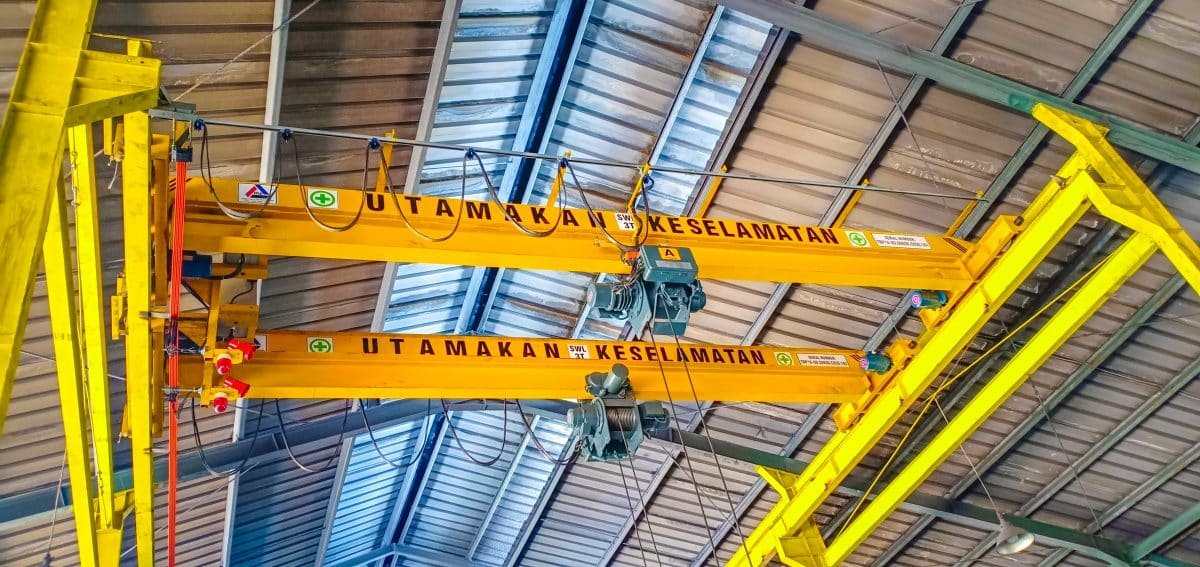

Analisis biaya & manfaat hoist crane untuk bisnis. Cek apakah investasi ini layak untuk efisiensi produksi dan keselamatan kerja Anda!
Sebagai pebisnis, terutama di industri manufaktur, konstruksi, atau logistik, Anda pasti sering dihadapkan pada keputusan investasi peralatan berat. Salah satu yang kerap jadi pertimbangan adalah hoist crane—alat pengangkat yang bisa menjadi game changer dalam operasional bisnis.
Tapi sebelum memutuskan, penting untuk menimbang secara matang: Apa benar hoist crane worth it untuk bisnis Anda? Berapa biaya yang harus dikeluarkan, dan seberapa besar manfaat yang bisa didapat? Mari kita bahas.
Hoist crane adalah alat pengangkat yang menggunakan sistem katrol, rantai, atau kawat baja untuk memindahkan beban berat secara vertikal maupun horizontal. Alat ini banyak digunakan di:
Jika bisnis Anda bergerak di bidang tersebut, hoist crane bisa menghemat waktu, mengurangi risiko kecelakaan kerja, dan meningkatkan efisiensi. Tapi tentu saja, investasinya tidak murah. Jadi, mari hitung untung-ruginya.
Sebelum memutuskan membeli atau menyewa hoist crane, Anda perlu tahu komponen biayanya. Berikut rinciannya:
Harga hoist crane bervariasi tergantung jenis, kapasitas, dan merek. Kisarannya:
Hoist crane butuh struktur pendukung seperti runway beam atau sistem rel. Biayanya bisa mencapai Rp50–200 juta, tergantung kompleksitas instalasi.
| Investment Scenario | Small Business | Medium Enterprise | Large Industrial | Heavy Industry |
|---|---|---|---|---|
| Initial Investment | ||||
| Equipment Cost | Rp 15-50 juta | Rp 100-300 juta | Rp 300-800 juta | Rp 800 juta – 2 miliar |
| Installation Cost | Rp 10-25 juta | Rp 50-150 juta | Rp 150-400 juta | Rp 400 juta – 1 miliar |
| Training & Setup | Rp 5-15 juta | Rp 20-50 juta | Rp 50-100 juta | Rp 100-200 juta |
| Total Initial Investment | Rp 30-90 juta | Rp 170-500 juta | Rp 500 juta – 1.3 miliar | Rp 1.3-3.2 miliar |
| Annual Operating Costs | ||||
| Maintenance | Rp 3-8 juta | Rp 15-40 juta | Rp 40-100 juta | Rp 100-250 juta |
| Energy | Rp 2-5 juta | Rp 8-20 juta | Rp 20-50 juta | Rp 50-120 juta |
| Insurance | Rp 1-3 juta | Rp 5-15 juta | Rp 15-35 juta | Rp 35-80 juta |
| Total Annual Operating | Rp 6-16 juta | Rp 28-75 juta | Rp 75-185 juta | Rp 185-450 juta |
| Annual Benefits | ||||
| Labor Cost Savings | Rp 50-120 juta | Rp 200-500 juta | Rp 500 juta – 1.2 miliar | Rp 1.2-3 miliar |
| Productivity Gains | Rp 30-80 juta | Rp 150-400 juta | Rp 400-900 juta | Rp 900 juta – 2.2 miliar |
| Safety Cost Avoidance | Rp 10-25 juta | Rp 40-100 juta | Rp 100-250 juta | Rp 250-600 juta |
| Total Annual Benefits | Rp 90-225 juta | Rp 390 juta – 1 miliar | Rp 1-2.35 miliar | Rp 2.35-5.8 miliar |
| ROI Analysis | ||||
| Net Annual Benefit | Rp 84-209 juta | Rp 362-925 juta | Rp 925 juta – 2.17 miliar | Rp 2.17-5.35 miliar |
| Simple Payback Period | 4-13 bulan | 5-17 bulan | 6-17 bulan | 7-18 bulan |
| 5-Year Net Present Value | Rp 250-750 juta | Rp 1.2-3.5 miliar | Rp 3.5-8.5 miliar | Rp 8.5-21 miliar |
| ROI Percentage (Year 1) | 180-580% | 130-285% | 85-265% | 70-265% |
| Break-Even Scenarios | ||||
| High Utilization (8+ hrs/day) | ||||
| Break-even Month | 3-4 bulan | 4-6 bulan | 5-8 bulan | 6-10 bulan |
| Required Monthly Benefit | Rp 7.5-22.5 juta | Rp 28-83 juta | Rp 83-217 juta | Rp 217-533 juta |
| Medium Utilization (4-8 hrs/day) | ||||
| Break-even Month | 6-8 bulan | 8-12 bulan | 10-15 bulan | 12-20 bulan |
| Required Monthly Benefit | Rp 3.75-11.25 juta | Rp 14-42 juta | Rp 42-108 juta | Rp 108-267 juta |
| Low Utilization (<4 hrs/day) | ||||
| Break-even Month | 12-24 bulan | 18-36 bulan | 24-48 bulan | 30-60 bulan |
| Required Monthly Benefit | Rp 1.25-3.75 juta | Rp 4.7-14 juta | Rp 14-36 juta | Rp 36-89 juta |
| Risk Assessment | ||||
| Best Case ROI | 580% (Year 1) | 285% (Year 1) | 265% (Year 1) | 265% (Year 1) |
| Worst Case ROI | 80% (Year 1) | 50% (Year 1) | 30% (Year 1) | 20% (Year 1) |
| Market Risk | Low | Medium | Medium | High |
| Technology Risk | Low | Low | Medium | Medium |
Setelah melihat biayanya, sekarang kita hitung ROI (Return on Investment)-nya. Apa saja keuntungan yang bisa didapat?
Dengan hoist crane, proses pengangkatan material yang biasanya membutuhkan 4-5 karyawan bisa dilakukan oleh 1 operator. Waktu kerja lebih efisien, beban kerja karyawan berkurang, dan produksi bisa berjalan lebih cepat.
Mengangkat beban berat secara manual berisiko tinggi terhadap cedera punggung, terpeleset, atau tertimpa material. Hoist crane meminimalkan risiko ini, sehingga mengurangi biaya kompensasi dan klaim asuransi.
Hoist crane, terutama jenis overhead crane, tidak memakan space lantai karena dipasang di atas. Cocok untuk gudang atau pabrik dengan space terbatas.
Hoist crane berkualitas bisa bertahan 10–20 tahun dengan perawatan tepat. Jadi, meski investasi awalnya besar, alat ini bisa dipakai dalam jangka panjang.
Tidak semua bisnis membutuhkan hoist crane. Pertimbangkan untuk tidak membeli jika:
Jika modal terbatas, beberapa opsi lain bisa dipertimbangkan:
| Decision Criteria | Buy New | Buy Used | Long-term Rent | Short-term Rent | Manual Alternative | Outsource |
|---|---|---|---|---|---|---|
| Financial Comparison | ||||||
| Initial Capital | Very High | Medium-High | Low | Very Low | Low | None |
| Monthly Cost | Low (after payback) | Low (after payback) | Medium | High | Very Low | Variable |
| Total 3-Year Cost | Medium (ownership) | Low-Medium | High | Very High | Low | Medium |
| Tax Benefits | Depreciation | Depreciation | Operational expense | Operational expense | Depreciation | Service expense |
| Operational Suitability | ||||||
| Project Duration | ||||||
| < 6 months | ❌ Not cost-effective | ⚠️ Consider if resale | ⚠️ Expensive | ✅ Ideal | ✅ Adequate | ✅ Flexible |
| 6-24 months | ⚠️ Break-even territory | ✅ Good option | ✅ Good option | ⚠️ Expensive | ⚠️ Labor intensive | ✅ Risk-free |
| > 24 months | ✅ Most cost-effective | ✅ Best value | ⚠️ Expensive long-term | ❌ Very expensive | ❌ Unsustainable | ⚠️ Dependency risk |
| Usage Intensity | ||||||
| Light (<2 hrs/day) | ⚠️ May be overkill | ✅ Good fit | ⚠️ Costly | ✅ Appropriate | ✅ Manageable | ✅ Cost-effective |
| Medium (2-6 hrs/day) | ✅ Justified | ✅ Excellent choice | ✅ Reasonable | ⚠️ Gets expensive | ⚠️ Fatigue issues | ✅ Consider |
| Heavy (>6 hrs/day) | ✅ Essential | ✅ Smart choice | ⚠️ High monthly cost | ❌ Prohibitive | ❌ Not feasible | ⚠️ Coordination issues |
| Business Factors | ||||||
| Cash Flow | ||||||
| Strong | ✅ Can invest | ✅ Smart investment | ✅ Preserve capital | ✅ Flexible | ✅ Minimal impact | ✅ OpEx model |
| Limited | ❌ Strain finances | ⚠️ Evaluate carefully | ✅ Manageable | ✅ Pay as needed | ✅ Affordable | ✅ Variable cost |
| Tight | ❌ Not advisable | ❌ Risk assessment needed | ⚠️ Fixed commitment | ✅ Control costs | ✅ Low cost | ✅ No investment |
| Business Growth | ||||||
| Expanding | ✅ Scale with growth | ✅ Foundation asset | ✅ Flexible capacity | ✅ Test before buying | ⚠️ Capacity limits | ✅ Scale services |
| Stable | ✅ Predictable ROI | ✅ Known requirements | ✅ Fixed costs | ⚠️ Occasional use | ✅ Consistent needs | ✅ Steady partnership |
| Uncertain | ⚠️ High commitment | ⚠️ Resale risk | ✅ Flexible terms | ✅ Minimal commitment | ✅ Low risk | ✅ Variable engagement |
| Technical Considerations | ||||||
| Customization Needs | ||||||
| High customization | ✅ Full control | ✅ Modify as needed | ❌ Limited options | ❌ Standard only | ✅ Simple solutions | ❌ Provider dependent |
| Standard requirements | ✅ Off-the-shelf | ✅ Cost-effective | ✅ Suitable options | ✅ Perfect fit | ✅ Basic needs | ✅ Standard service |
| Maintenance Capability | ||||||
| In-house expertise | ✅ Full control | ✅ Cost advantage | ⚠️ Limited access | ⚠️ Provider dependent | ✅ Simple maintenance | ❌ No responsibility |
| External service | ⚠️ Ongoing costs | ⚠️ Service contracts | ✅ Included | ✅ Included | ⚠️ Basic service | ✅ Full service |
| Risk Assessment | ||||||
| Technology Risk | ||||||
| Obsolescence | High (long ownership) | Medium (shorter cycle) | Low (provider risk) | Very Low | None | Provider manages |
| Breakdown | Owner responsibility | Owner responsibility | Provider responsibility | Provider responsibility | Low complexity | Provider responsibility |
| Market Risk | ||||||
| Demand fluctuation | High exposure | Medium exposure | Medium flexibility | High flexibility | Very flexible | Highly flexible |
| Economic downturn | Asset depreciation | Resale challenges | Contract obligations | Easy to scale down | Minimal impact | Easy adjustment |
| Scoring System | ||||||
| Total Score (/100) | ||||||
| Financial (30 points) | 20-25 | 22-28 | 18-22 | 15-20 | 25-30 | 20-25 |
| Operational (25 points) | 18-23 | 20-25 | 20-23 | 18-22 | 15-20 | 20-23 |
| Strategic (25 points) | 20-25 | 18-23 | 15-20 | 12-18 | 18-22 | 18-22 |
| Risk (20 points) | 12-16 | 14-18 | 16-18 | 17-19 | 18-20 | 17-19 |
| Typical Total | 70-89 | 74-94 | 69-83 | 62-79 | 76-92 | 75-89 |
| Best Fit Scenarios | Established business, predictable high usage | Value-conscious, medium-high usage | Growing business, testing market | Project-based, short-term | Cost-sensitive, light usage | Focus on core business |
Hoist crane bisa menjadi solusi efisiensi bagi bisnis yang sering menangani beban berat. Namun, keputusan investasi harus didasarkan pada:
Jika setelah kalkulasi ternyata hoist crane bisa memangkas biaya operasional, mempercepat produksi, dan meningkatkan safety, maka investasi ini layak dipertimbangkan.
Tapi jika ternyata belum perlu? Jangan dipaksakan. Cari alternatif yang lebih sesuai dengan kondisi bisnis Anda.
Bagaimana, sudah ada gambaran apakah hoist crane cocok untuk bisnis Anda? Kalau masih ragu, coba konsultasikan dengan supplier terpercaya untuk analisis lebih mendalam. Semoga membantu!
Hoist crane manual menggunakan tenaga manusia (seperti chain block), cocok untuk beban ringan dan operasional sederhana. Sementara hoist crane elektrik digerakkan motor, lebih cepat dan kuat, ideal untuk industri besar dengan beban berat.
Dengan perawatan berkala, hoist crane berkualitas bisa bertahan 10–20 tahun. Faktor seperti frekuensi penggunaan, beban maksimal, dan kondisi lingkungan juga memengaruhi ketahanannya.
Tergantung jenisnya. Overhead crane sulit dipindah karena terpasang permanen di struktur bangunan. Namun, portable hoist atau mobile crane bisa dipindahkan dengan mudah untuk proyek berbeda.

